
Grokking the Alphabet
Memes, literacy, and the invisible structures of culture

People often ask me why I talk so much about memes. The word has been reduced in common use to annotated photos on the internet — clever captions, viral jokes, political jabs. But that trivialization hides something much deeper. Memes are not new, and they are not jokes. They are the very units of culture.
To see this, you first need to distinguish between understanding and grokking.
To understand something is to be able to define it, explain it, analyze it, and apply it. To grok something is different. To grok is to absorb it so deeply that it becomes instinct, a structure of thought you no longer notice, a lens you don’t realize you are looking through.
You already grok more memes than you realize. The alphabet is one of them.
The Alphabet Is a Memeplex and Letters Are Memes
At first glance, the alphabet seems like nothing more than a list of symbols. But it is more than that. The moment you learned to read, you internalized a recursive system of relationships, rules, and expectations. You don’t stop to decode each letter as you go. You read. Fluidly, and usually, effortlessly.
Each letter is a meme, a unit of symbolic transmission.
The alphabet as a whole is a memeplex — a collection of memes that functions as a system.
Repeated patterns of letters train your expectations. Some combinations feel natural; others jar.
The letters themselves are meaningless without the cultural agreement that gives them force.
And most importantly: you don’t think about any of this. You grok it.
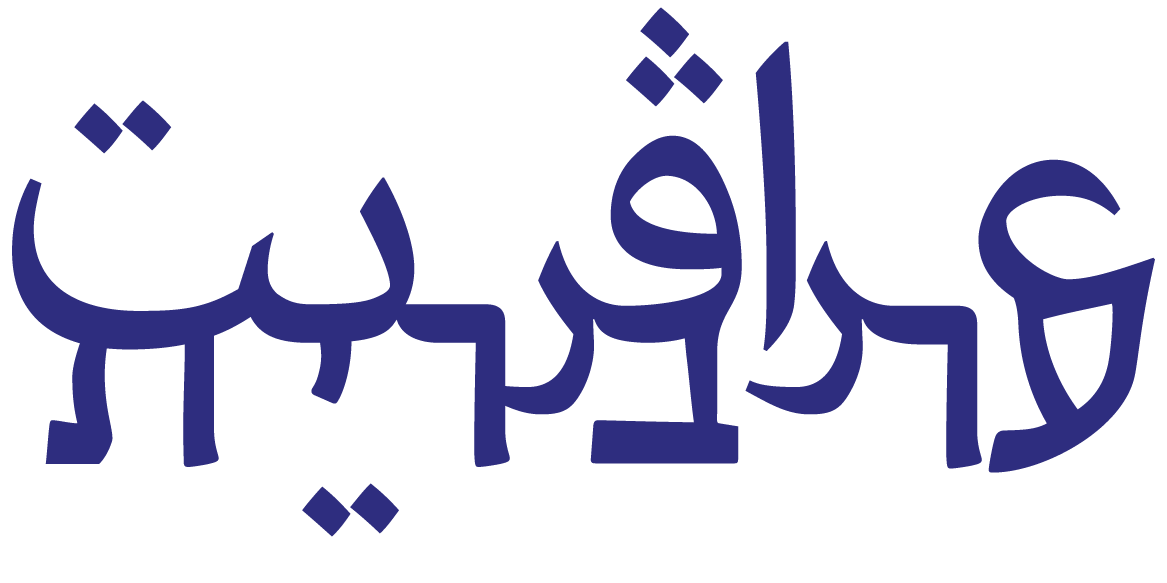
A meme is not just a unit of culture; it is a pattern identified as unitary. Take the letter “O.” Enlarged and standing alone, most people would say it is a circle. Here, in this text, that same circle indicates the sound O. In Hebrew cursive it marks the sound S. In Arabic script it resembles a final H. In Greek and Cyrillic, it shares its phonology with the Latin script. Whatever the association — phonological, linguistic, or symbolic — the shape itself remains a circle. That is the meme: the recognition of a single form, repeated across contexts, carrying different functions but still grasped as one.
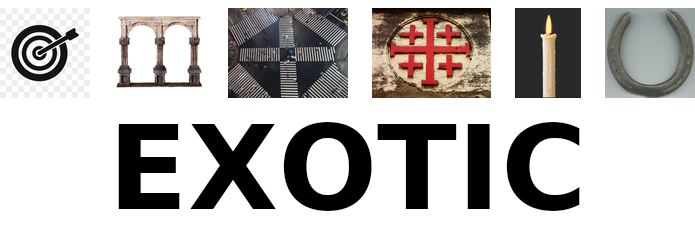
The alphabet is not fixed. Its parts shift depending on context:
The “C” in cat is not the “C” in ceiling.
The “T” in butter changes depending on whether you are in New York or London.
The word read sounds different depending on whether you are speaking of present or past.
Your brain doesn’t pause to puzzle it out. You absorb the context and adjust instantly.
This is epimemetic determination — the principle that the expression of a meme depends on the surrounding memes. A single symbol has no fixed sound or meaning; its function changes depending on its place within the larger structure.
You don’t struggle with this, it happens instinctively. That is proof you already grok recursion.
Recursion and Fractals
The alphabet is recursive. Small elements repeat into larger patterns, compounding into infinite complexity:
Letters make words.
Words make sentences.
Sentences make ideas.
Ideas make narratives, cultures, laws, histories, identities.
That’s a fractal pattern — a simple structure repeating itself at different scales until its complexity becomes invisible.
The alphabet is at once a meme and a memeplex. Up to now we’ve been treating it as a memeplex — the box containing all the letters, the system within which each symbol gains its function. But the alphabet can also be treated as a meme.
Think of the sentence: “Today there is a lecture on the utility of the Latin vs. Cyrillic alphabets in Slavic languages.” Here, alphabet is not just the internal system of letters. It is a cultural emblem. Latin and Cyrillic alphabets carry associations of identity, prestige, morphology, and history. They have been chosen, imposed, or resisted by nations. They have drawn boundaries of religion and empire. They are not only tools for reading — they are emblems of belonging.
This is what it means for memes to be fractal. A memeplex can collapse into a single meme, and a meme can expand into a memeplex. The same structure repeats at different scales: a letter, an alphabet, an entire cultural identity. Each contains the others, each reflects the others, and none can be fully understood without its context.
And it is not limited to letters. Religion, politics, economics, morality, identity — each is its own alphabet. A system of memes that only make sense in relation to one another, repeated until they become instinct.
You already participate in recursion. You already carry thousands of memes in your mind. You already grok entire systems without ever having “learned” them formally. If you can read without thinking about reading, you can also begin to perceive the patterns that shape history and culture.
Beyond Reading: Memetic Landscapes
The alphabet doesn’t just let you read. It also lets you recognize when you cannot read.
Even though you know the shapes, when they appear in combinations that make no sense to you, you immediately know: this is another language. The letters are familiar, but the pattern belongs to a different world.
That recognition is memetic as much as linguistic. Each language belongs to its own memetic landscape — the set of memes that make sense together within one culture. The words, idioms, rhythms, and assumptions fit into one another, just as letters do. Step outside that system, and the same symbols feel alien.
And just as you carry a vocabulary you can draw upon in speech, you also carry a memetic reservoir — the store of ideas, stories, gestures, habits, and intuitions you’ve absorbed. This is what allows you to move fluently inside your own culture without conscious effort. It is also what makes you stumble when you cross into another culture’s landscape.
The alphabet teaches this lesson clearly: the same shapes can be legible or illegible depending on the system they belong to. The same is true of memes.
Allegory as Memetic Training
Allegory is one of mankind’s oldest tools for teaching grokking. Unlike direct explanation, which demands immediate comprehension, allegory embeds meaning in a layered structure. You can encounter it at different stages of life and extract new depths each time.
An allegory is a memeplex designed for progressive revelation:
Surface recognition. A story taken at face value.
Symbolic recognition. Patterns emerge that point beyond the literal.
Deep grokking. The structure itself becomes instinct, absorbed into your own framework.
Allegories are fractal. A child hears a story and learns a simple moral. The same person, decades later, sees an entirely new dimension that was always there, invisible until their mind was ready to perceive it.
This is why allegory survives where didactic instruction fails. It does not force understanding. It plants a seed. It allows meaning to ripen in its own time.
From Alphabet to Writing
The alphabet is only the beginning. Once you know the letters, you must also learn the rules of how they combine — punctuation, rhythm, format. Writing systems don’t just transmit words. They transmit structures.
Punctuation distinguishes a pause from an end, a question from a statement, a clause from a complete thought.
Form differentiates prose from poetry, legal code from myth, scripture from satire.
Numerals introduce whole new dimensions: they let you recognize an outline, a story, a genealogy, or a family tree.
Each of these is an additional layer of memetic structure. You don’t only learn what the symbols mean; you learn how meaning is arranged, categorized, and signaled. To read a poem requires different instincts than to read a court judgment. Both depend on the same letters, but the surrounding conventions — the memeplex — demand different kinds of grokking.
This is where literacy moves from the threshold to the architecture of culture itself. Knowing the alphabet is enough to access a language. But knowing how to read the forms — how to move between a proverb and a psalm, a ledger and a love letter — is what gives access to the deeper levels of a civilization.
The same is true of memes. (Let’s not forget, the letters are memes.) A meme is never just a symbol. It belongs to a structure: a ritual, a tradition, a story, an ideology. To grok the meme fully is to recognize the form it inhabits, the larger matrix that tells you whether you are reading a sermon, a satire, or a battle cry.
Literacy as the Hallmark of Memetic Sophistication
Now consider literacy itself. You can often recognize an alphabet without knowing how to read it. You may not know how to pronounce a word in Arabic, but you can look at the script and know it is Arabic. The same is true for Cyrillic, Hebrew, Devanagari. You can identify the system without knowing the rules by which it operates. Recognition is not grokking.
That is the difference literacy makes. Today, literacy rates are near-universal, but this is a very recent development. For most of history, most people could not read at all. Think about the complexity that becomes accessible once you can. Whole landscapes of thought open that were once closed. To the illiterate, a foreign alphabet is not just difficult — it is impenetrable.
Knowledge of the alphabet is the threshold to grokking language at a higher resolution of sophistication. Without it, the world is limited to what can be spoken and heard directly. With it, you inherit an archive of thought, law, history, and identity.
The same is true of memes. Some people grok entire systems — religious, political, economic, moral — because they have been exposed, have received them, internalized them, engaged with them, and adapted to them. Others glimpse only fragments, never the structure. To them, a foreign memeplex looks as indecipherable as an alphabet they cannot read.
Literacy has always been a hallmark of cultural complexity — both the emblem of sophistication and the litmus test of who can cross its threshold.
The alphabet teaches this lesson clearly: knowing the system determines whether complexity is accessible or invisible. The same is true for memes.
I have just conveyed these ideas to you via allegory. Did it help?
Making the Invisible Visible
The alphabet is a perfect demonstration: a structure so deeply integrated into daily life that it disappears from view. Yet its recursive design is the very reason you can read these words at all.
Memes work the same way. They are the invisible structures through which mankind has always lived — embedded in language, law, ritual, identity. To recognize them is not to invent a new framework, but to make visible what has always been there.
That is why I talk about memes. Not because I care about internet jokes, but because memes are the unseen architecture of civilization. Once you grok this, the rest of my work will begin to cohere.
Really interesting.
When did you first realize that letters were more than sounds? Perhaps it was the "k" in "knight" or the "x" in "faux pas".